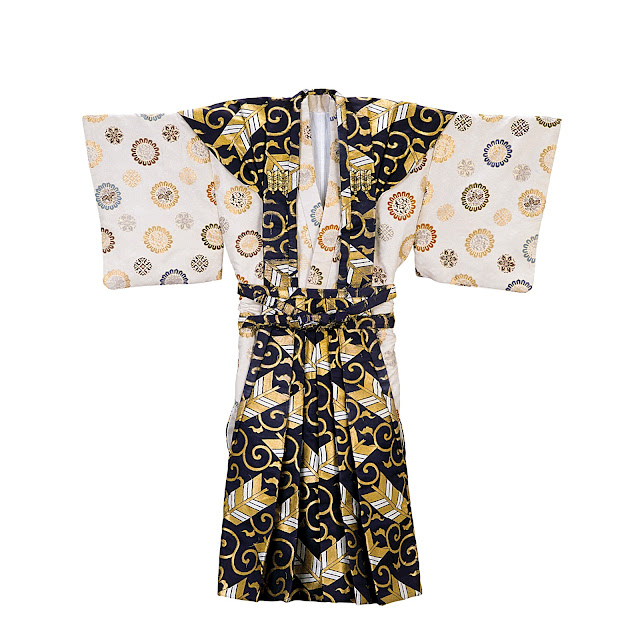
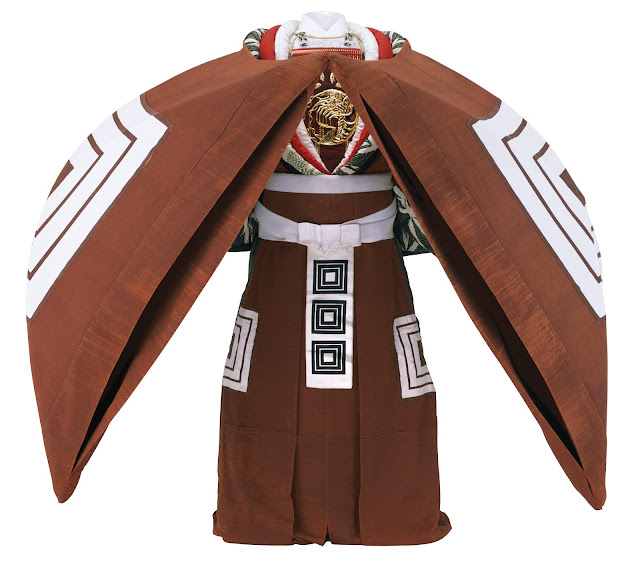
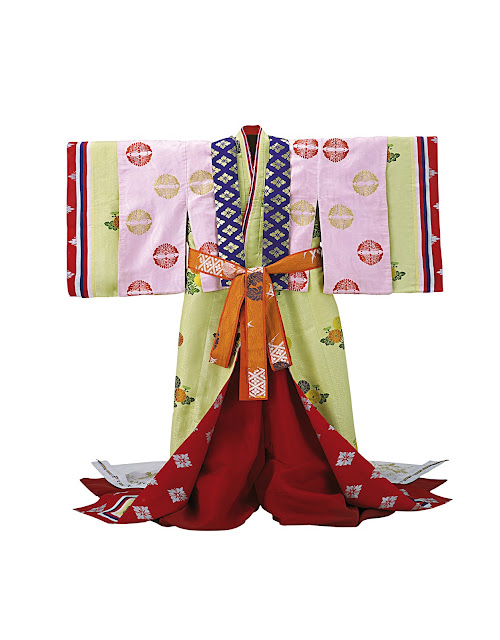
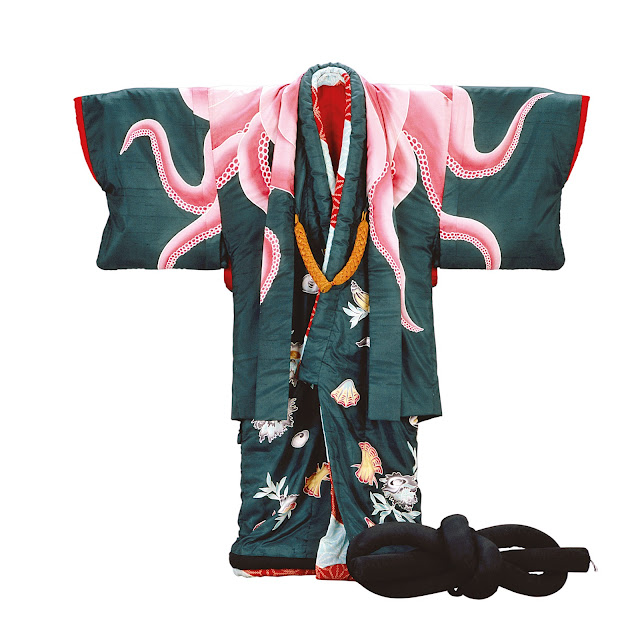
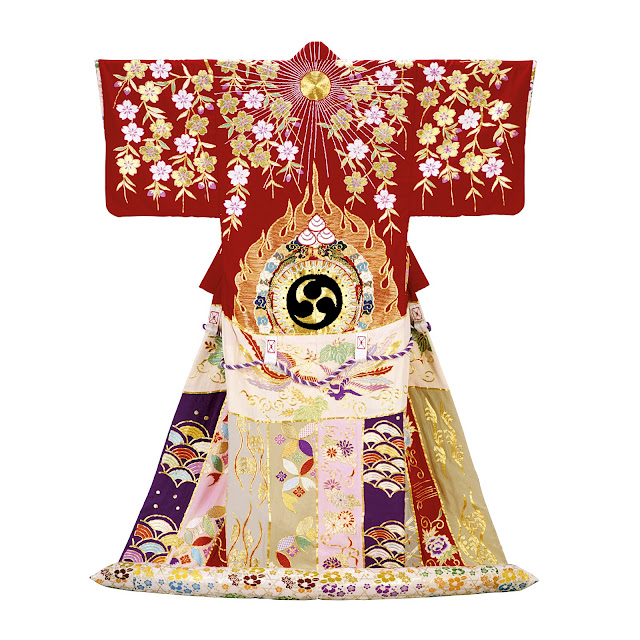
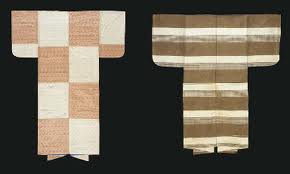
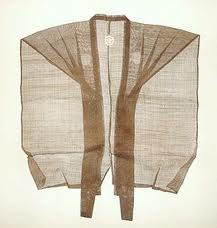
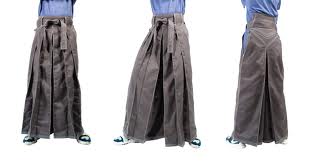
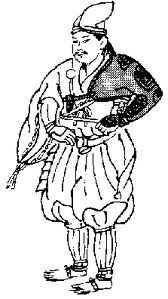
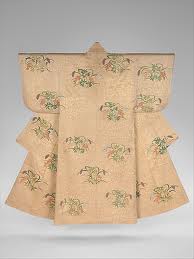
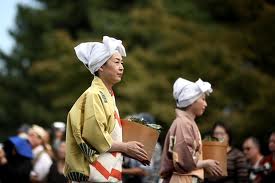
THE COSTUMES OF THE KABUKI The breathtaking sights of the Kabuki costume wasn't very simple because of the various types and beauty of each piece. There was your kimono, which seems basic yet had many colors and patterns. there was an uchikake which was a women's ceremonial costume, decorated with many intricate designs and many different styles of uchikake. Another piece was the Haori and Sitsuke. The Haori was a short coat and the Sitsuke was a blue kimono. they were paired on =e on top f the other. Kitsuke, similar to Sitsuke was a kimono with florl motifs and coats of arms belonging to noble families. The men had different costumes as well. the ceremonial costume of the men had large sleeves clled Suo, and pants Hakama, just like the Kyogen. They also had different types of dance costumes, as well as costumes like the kamishimo which was a samorai costumes styled with motifs. COSTUMES OF THE KYOGEN Costumes used in Kyogen are much less elaborate than those used in Kabuki. Their main use is to show what the social class of the character portrayed. Kabuki was of lower class then the Kabuki performances, so most of the costumes were plain and simple, yet they incorporated unconventional shapes and designs.. The costumes were made of hemp, taking the place of silk, from the Kabuki performances. The women in the performances wore bright kimonos, as well as in the Kabuki. Many of the designs also, reflected time of year. If the performance took place in the spring for example, some of the costumes would have flower patterns or "spring" colors. There are various types of costumes worn throughout the Kyogen play. For instance, a Dan-Noshime was a robe that was worn underneath the costumes. Another piece that would be worn was the Suo. It is a type of suit with a vest inside he jacket. some characters would also wear a special hat called a Hora-Eboshi. Kataginus, would be worn as a type of vest or jacket, while Hakama would be worn as pants. There are 2 types of pants, the Hakama and the Kyakuhan. The Kyakuhan was fit loosely at thighs and waist, and fit tightly at shins and ankles. In the Kyogen performances, the women roles had different aspects, they had a Nuihaku under the costume instead of a Dan-Noshime. The also had a specail hat, called a Binan-Boshi, which allowed a white clot to be wrapped around it then tucks into the waistband. |
||
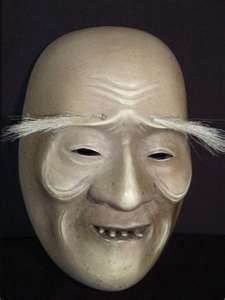
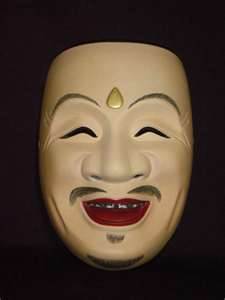
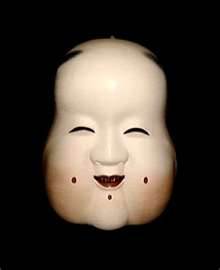
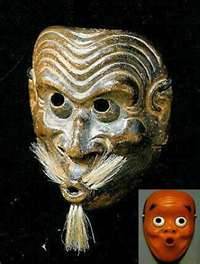
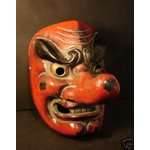
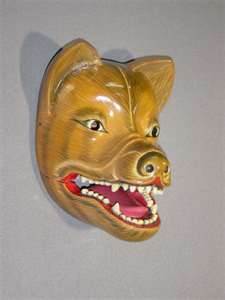
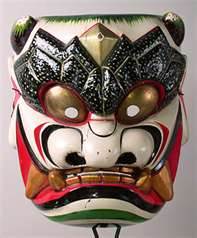
Kyogen Masks
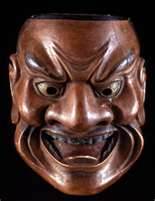
Kyogen masks are mainly used for three purposes. THe gods and demons had masks, the animals, plants, and their spirits had a group, and lastly human beings... |
||